
Premises Liability Summary Judgment
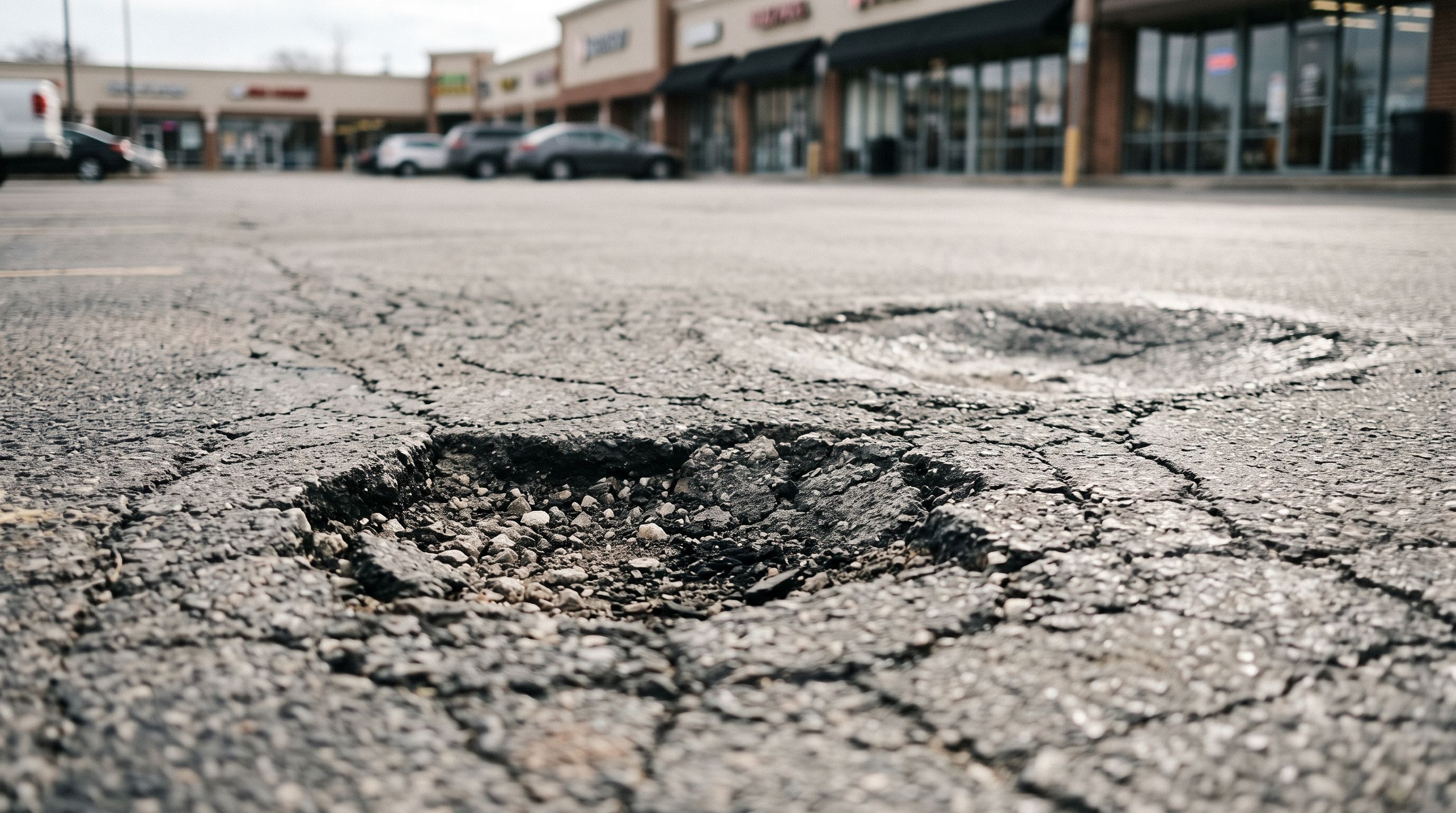
Yes, it is possible to obtain favorable summary judgment rulings for the plaintiff in premises liability actions! Recently a lawsuit was brought against the owner of a shopping center who stated there was no liability for an injury. A patron fell because of a depression in the parking lot. The hole was unmarked and there were no warnings about the hazard.
The defendants’ insurer had paid $5,000 for medical expenses but Defendants firmly stated they had no further responsibilities for the client’s injuries. They repeatedly stated that since the parking lot hole was “open and obvious” they could not be held liable for any injuries.
At deposition, the owner’s maintenance engineer said it was her responsibility to keep the parking lot clean, level and safe. It was patrolled three times a week. Employees cleaned dirt and debris from this hole many times and the hole was about the size of a human foot. It never occurred to the maintenance engineer to mark the hazard or have it repaired. After the plaintiff's accident, the owners fixed the hole. During discovery, the plaintiff obtained the invoice and evidence of payment for the repair.
The plaintiff also testified at deposition that she had never seen the hole before; the defect “blended in” with the rest of the parking; she was alone at the time of her fall; had only car keys in her hand; was not talking on her cell phone; and was looking straight ahead at the doorway of the business where she was headed.
Based on these facts, rather than waiting for a motion for summary judgment to be filed by the defendant against her, plaintiff's counsel took the initiative to file a motion for summary judgment to obtain a ruling on the shopping center’s liability. See the attached Order by the trial judge granting the summary judgment. Liability for injuries and damages was found based upon OCGA 51-3-1 and the Georgia Supreme Court decision of Robinson v. Kroger, 493 SE 2d 403 (1997).
The plaintiff moved to apply the two prong test set forth by the Georgia Supreme Court in Robinson v. Kroger. There, the Supreme Court stated in premises liability lawsuits the plaintiff must prove: i) a defendant has actual or constructive knowledge of a hazard; and ii) the plaintiff lacked knowledge of a hazard despite the exercise of ordinary care due to conditions within the control of the owner. Id. 414.
But before the second element must be shown by a plaintiff, however, the Supreme Court requires the property owner to bring forward evidence of the plaintiff's negligence. This is because the owner itself has been shown to have actual or constructive knowledge of a hazard on its property. Applying the formula enunciated in Robinson v. Kroger, the trial judge in the shopping center parking lot case found that defendants were aware of the hole and maintained control and power over the parking lot. This satisfied the Supreme Court requirement that a defendant have “actual or constructive knowledge of a hazard.” Id. 414. Since this was established by unrefuted evidence, the defendants were required by the Supreme Court to show, or “shoulder the burden” of establishing some negligence on the part of the plaintiff, which they failed to do. Id. 414.
Defendants simply argued the hole was “open and obvious” and in “plain view” which, under Georgia law, requires an object or hazard to be very large. An unmarked parking lot hole about the size of a human foot does not meet this criteria; so the trial judge held the depression was not open and obvious as a matter of law. The Georgia Court of Appeals has held that an unmarked parking lot hole about the size of a human foot was not large enough to be open and obvious or in plain view. See Thomas v. Baptist Convention, 585 SE 2d 217 (2003).
Robinson v. Kroger also holds that a plaintiff is not required to look at the ground before taking every step in order to inspect for defects or dangers. It is the property owner’s job to keep the premises safe. Id., 410.