
EMT and Paramedic Malpractice
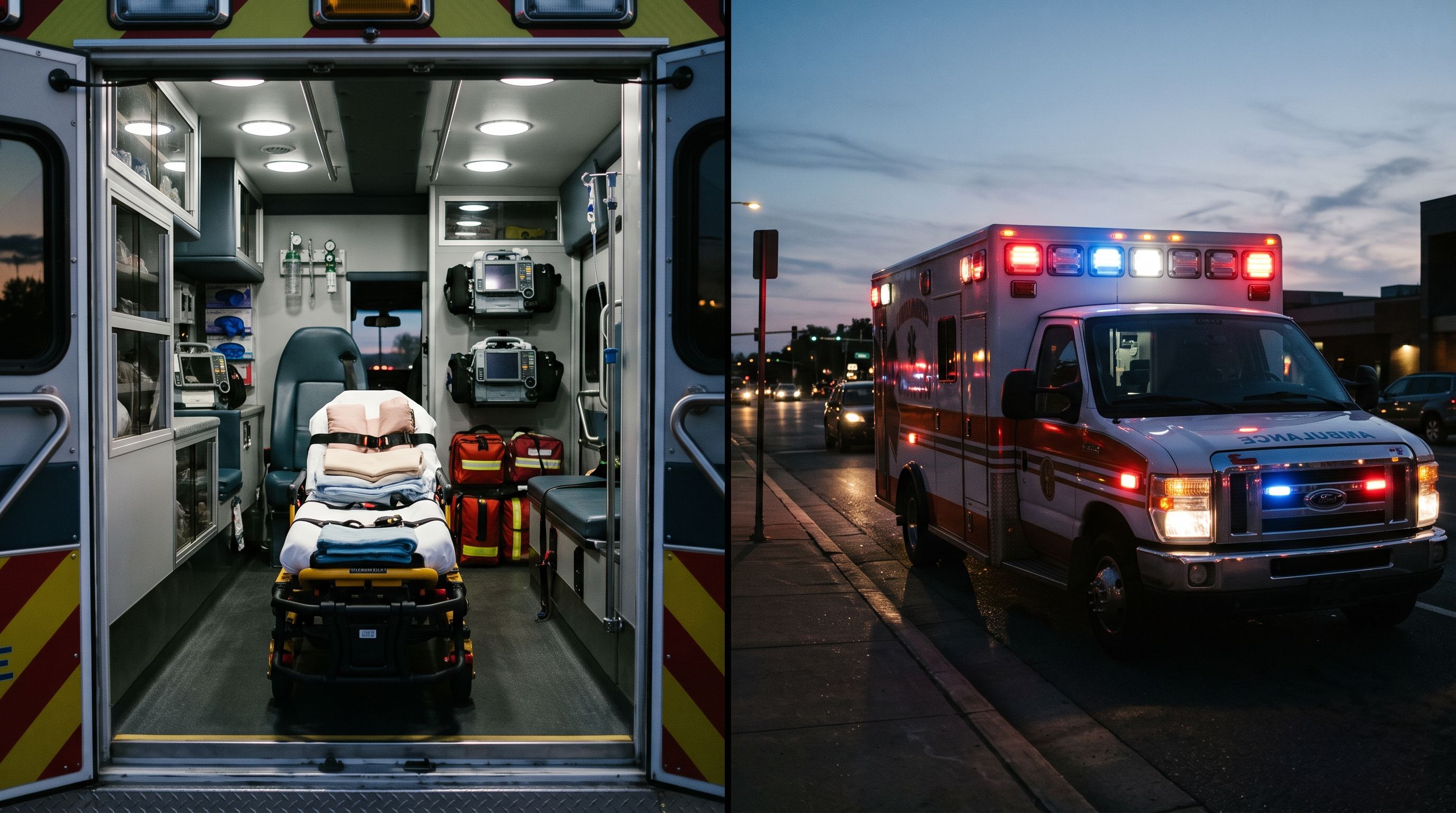
Although it is rare, ambulance operators may make mistakes and on occasion perform their duties negligently. They are trained medical professionals and their errors can have serious or even fatal consequences.
Wrongdoing could involve both ordinary negligence and medical malpractice. Examples could include an emergency vehicle going to the wrong address; lack of certifications and licenses; inadequate staffing; failure to properly equip emergency vehicles; medical mistakes; violation of protocols; unprepared or untrained personnel; improper driving causing delays or accidents; incorrect patient evaluations; wrong or delayed diagnoses; delayed response times; inaccurate records; misuse of equipment; using wrong equipment; failure to maintain equipment; unrestrained patients in stretchers; decisions concerning the viability of emergency patients; and wrong medications or dosages.
Georgia regulations state emergency caregivers shall not practice without proper credentials and the statutory definition of the practice of medicine indicates paid ambulance personnel are practicing medicine.
Emergency medical services (“EMS”) are performed gratuitously or personnel are paid for assisting those in a crisis setting. Emergency medical technicians (“EMTs”) and paramedics can work for private companies or for local governments. This discussion will focus on private EMS companies and workers who receive compensation. If emergency personnel are employees of the government, then sovereign immunity will often prevent tort claims.
Several laws address negligence in an emergency situation and they are identified below, followed by a discussion of Georgia legal decisions. A statute gives immunity to EMS actions done gratuitously but does not cover those who receive compensation. There are also substantial protections from malpractice liability in a statute which covers emergency medical care at or immediately following care in a hospital’s emergency department (“ED”); it requires clear and convincing evidence of gross negligence and does not cover ambulance operations. Also discussed below is the requirement for an expert medical affidavit to accompany a malpractice complaint. Because of clear language in this statute, the affidavit requirement does not apply to a malpractice claim against EMTs or paramedics.
The practice of medicine is defined in OCGA § 43-34-21 as a person engaged in the diagnosis or treatment of injuries, diseases or defects of human beings, or the recommendation or prescribing of any form of treatment for the palliation, relief or cure of any ailment or defect with the intention of receiving compensation. The activities of paid EMTs and paramedics meet the statute's definition of practicing medicine.
A medical malpractice claim is defined in OCGA § 9-9-60 as any claim for damages from death or injury arising out of health, medical or surgical services, diagnosis, prescription, treatment or care, rendered by a person authorized by law to perform the service; or care or service rendered by a private institution. A malpractice claim for damages arising from EMT or paramedic actions will many times arise out of health or medical services, diagnosing, treatments and care.
Recovery for medical malpractice is authorized by OCGA § 51-1-27 which states that a person practicing surgery or administering medicine for compensation must use a reasonable degree of care and skill and any injury resulting from the want of care is a tort for which there may be a recovery. Lack of reasonable care and skill in malpractice actions is established through a preponderance of evidence as defined in OCGA § 24-1-1 (5) (superior weight of evidence sufficient to incline reasonable and impartial minds to one side of the issue).
OCGA § 51-1-29.5 (c) requires clear and convincing evidence of gross negligence for emergency medical care, but is limited to a hospital’s ED and a hospital’s obstetrical or surgical unit when transferred from the ED. Ambulance operators provide emergency care but their activities are not within a hospital. Therefore the heightened standards do not apply to the emergency care given by EMTs and paramedics working in an ambulance setting.
OCGA § 9-11-9.1 requires an expert affidavit to be filed with a malpractice complaint and paragraph (g) lists 26 professions needing affidavits. Although many occupations within the medical field are listed, EMTs and paramedics are not on the list. A complaint for EMT or paramedic malpractice does not have to be filed along with an expert affidavit. The professions related to medical or healthcare fields which require an affidavit are as follows: audiologists, chiropractors, dentists, dietitians, medical doctors, nurses, occupational therapists, optometrist, osteopaths, pharmacists, physical therapists, physicians’ assistants, podiatrists, radiological technicians, respiratory therapists, speech-language pathologists, and veterinarians. See OCGA § 9-11-9.1 (g).
OCGA § 31-11-8 (a) and (c) give immunity to gratuitous ambulance operations and those who invoke this immunity must receive no compensation for their emergency services. The statute says any person licensed to furnish a service and who in good faith renders emergency care shall not be liable for any civil damages if those persons perform services for no remuneration.
OCGA § 51-1-29.3 is another immunity statute covering the good faith use of external defibrillators. Once again the immunity statute excludes those who receive compensation involving use of defibrillators.
The Georgia Department of Public Health has rules which address licenses and certifications of EMS personnel. Rule 511-9-2-.12 states no person shall practice as an EMT or paramedic without having a state license and among other things a license cannot be issued without specific national certifications. See Ga. Comp. R & Regs. R. 511-9-2-.12, Emergency Medical Services Personnel.
The Georgia Supreme Court decision of Zwiren v. Thompson, 578 SE 2d 862, 864, 276 Ga. 498 (2003) explains medical malpractice actions as follows:
"‘A person professing to practice surgery or the administering of medicine for compensation must bring to the exercise of his profession a reasonable degree of care and skill. Any injury resulting from a want of such care and skill shall be a tort for which a recovery may be had.’ OCGA § 51-1-27. Three essential elements to establish liability in a medical malpractice action have emerged from the statute: ‘(1) the duty inherent in the ... relationship; (2) the breach of that duty by failing to exercise the requisite degree of skill and care; and (3) that this failure be the proximate cause of the injury sustained.’... Medical malpractice being a civil cause of action, a plaintiff must prove liability (i.e., duty, negligence, proximate cause) by a preponderance of the evidence. OCGA § 24-4-3. ‘Preponderance of the evidence’ is statutorily defined as ‘that superior weight of evidence upon the issues involved, which, while not enough to free the mind wholly from a reasonable doubt, is yet sufficient to incline a reasonable and impartial mind to one side of the issue rather than to the other.’ OCGA § 24-1-1(5). ‘The standard requires only that the finder of fact be inclined by the evidence toward one side or the other.’ Zwiren, at 864, citations omitted.
A 1998 a Georgia Supreme Court decision held that a paramedic who was an employee of a county government was protected by constitutional immunity, and the county also had immunity. See Harry v. Glynn County, 501 SE 2d 196, 269 Ga. 503 (1998). There is no waiver of immunity by purchasing motor vehicle insurance unless the personal injury or death arose from the county’s use of a motor vehicle, and in Harry the claim was for misdiagnosis and failure to use a defibrillator. Also see Polk County v. Ellington, 702 SE 2d 17, 306 Ga. App. 193 (2010) which followed the Harry precedent and refused to find a paramedic’s alleged negligent medical care was covered by ambulance vehicle insurance coverage. In Ellington the county and its employees were given constitutional immunity from a tort action based on a paramedic employee’s misdiagnosis of a heart attack as just acid reflux.